Color to thread matcher
Find the DMC floss closest to any color, with an honest score for how close it really is.
Pick a color
Choose a shade or paste a hex code, and we will find the threads that look closest to it.
- DMC 322Baby Blue Dark
Anchor 978 · Madeira 1004 · Cosmo 166/526 · Olympus 354 · J&P Coats 7978 · Semco 889
Near on screenΔE 3.7 - DMC 799Delft Blue Medium
Anchor 136/130 · Madeira 0910 · Cosmo 213/2662 · Olympus 332 · J&P Coats 7030 · Semco 888
Near on screenΔE 5.7 - DMC 334Baby Blue Medium
Anchor 977 · Madeira 1003 · Cosmo 165/524 · Olympus 353 · J&P Coats 7977 · Semco 889
Near on screenΔE 7.0 - DMC 826Blue Medium
Anchor 161 · Madeira 1012 · Cosmo 254 · Olympus 304 · J&P Coats 7180 · Semco 895
Not closeΔE 7.4 - DMC 931Antique Blue Medium
Anchor 921/1034 · Madeira 1711 · Cosmo 733 · Olympus 314 · J&P Coats 7051 · Semco 895
Not closeΔE 7.8 - DMC 825Blue Dark
Anchor 142 · Madeira 1011 · Cosmo 255 · Olympus 305 · J&P Coats 7181 · Semco 896
Not closeΔE 8.1
Browse the whole range on the DMC color chart, or work out how much of each shade you need with the thread calculator.
Matching a color to embroidery floss
You have a shade in mind: a color from a photo, a brand palette, a paint chip, the blue of a favorite mug. The question is always the same, which DMC floss comes nearest. This tool answers it by converting your color and all 489 solid DMC shades into CIELAB, a color space arranged the way human vision is, then ranking them with CIEDE2000, the international standard for perceived difference.
The ΔE figure beside each result is the useful part. Roughly speaking, 1 is the smallest difference an eye can detect with the two colors side by side. Under 3 and you would have to look hard. Past 7 the thread is simply the nearest thing the range offers, which is worth knowing before you order it and feel disappointed.
One limit deserves stating plainly, because no color tool can engineer around it. This compares two colors on a screen. Stranded cotton is a twisted, light-catching material, and no monitor reproduces that, nor do any two monitors agree with each other. Treat the results as a shortlist to check against a physical card. Then browse the full range on the DMC color chart and work out quantities with the thread calculator.
DMC, Anchor, Madeira, Cosmo, Olympus, J&P Coats and Semco are trademarks of their respective owners. My Cozy Cross Stitch is not affiliated with, endorsed by or sponsored by any of them. Color values are compiled from published readings, cross-checked against a second reference, and are not issued by the manufacturers.
Frequently asked questions
How does the thread matcher decide what is closest?
It converts your color and every thread into CIELAB, a color space built around how human vision actually works, then compares them with CIEDE2000. That formula is the current international standard for perceived color difference. Plain distance between RGB values would be simpler, but it rates two dark navies as further apart than a pale pink and a pale peach, which is the opposite of what your eye reports.
What does the ΔE number mean?
It is how different two colors look, on a scale where roughly 1 is the smallest difference a person can notice side by side. Under 1 the two are indistinguishable, under 3 you would struggle to tell them apart, under 7 they are clearly related, and above that you are looking at two different colors that happen to be the nearest available.
Can I trust the match enough to buy thread?
Use it as a shortlist, not a decision. The comparison happens between two colors on a screen, and screens do not agree with each other or reproduce the sheen of stranded cotton. A match under 3 is a solid starting point; anything labelled approximate means the range simply has nothing very near your color. Check the shortlist against a physical color card before spending money.
Why does another site give a different ΔE for the same color?
Almost certainly because it uses CIE76, the 1976 formula, which is still common because it is easy to implement. CIE76 systematically overstates differences in the blues and understates them elsewhere, which is precisely why CIEDE2000 was developed. The two often agree on which thread is closest while disagreeing on the number.
Which thread brands can I match against?
The colour comparison runs against the 489 solid DMC stranded cotton colors, which is what nearly every pattern is written for. Each result then shows its Anchor, Madeira, Cosmo, Olympus, J&P Coats and Semco equivalents, taken from a cross-reference chart. We do it in that order deliberately: we hold verified color data for DMC and not for the other brands, so matching DMC first and translating second is more honest than pretending to measure a distance we cannot measure.
How reliable are the Anchor and Madeira numbers shown?
They are one step further from certain than the DMC result. The DMC match is arithmetic on color data we cross-checked against two sources. The brand equivalents come from a conversion chart compiled by needleworkers, since no manufacturer publishes equivalences with its competitors. Good enough to shop with, not a promise of an identical shade.
From the blog
All articles →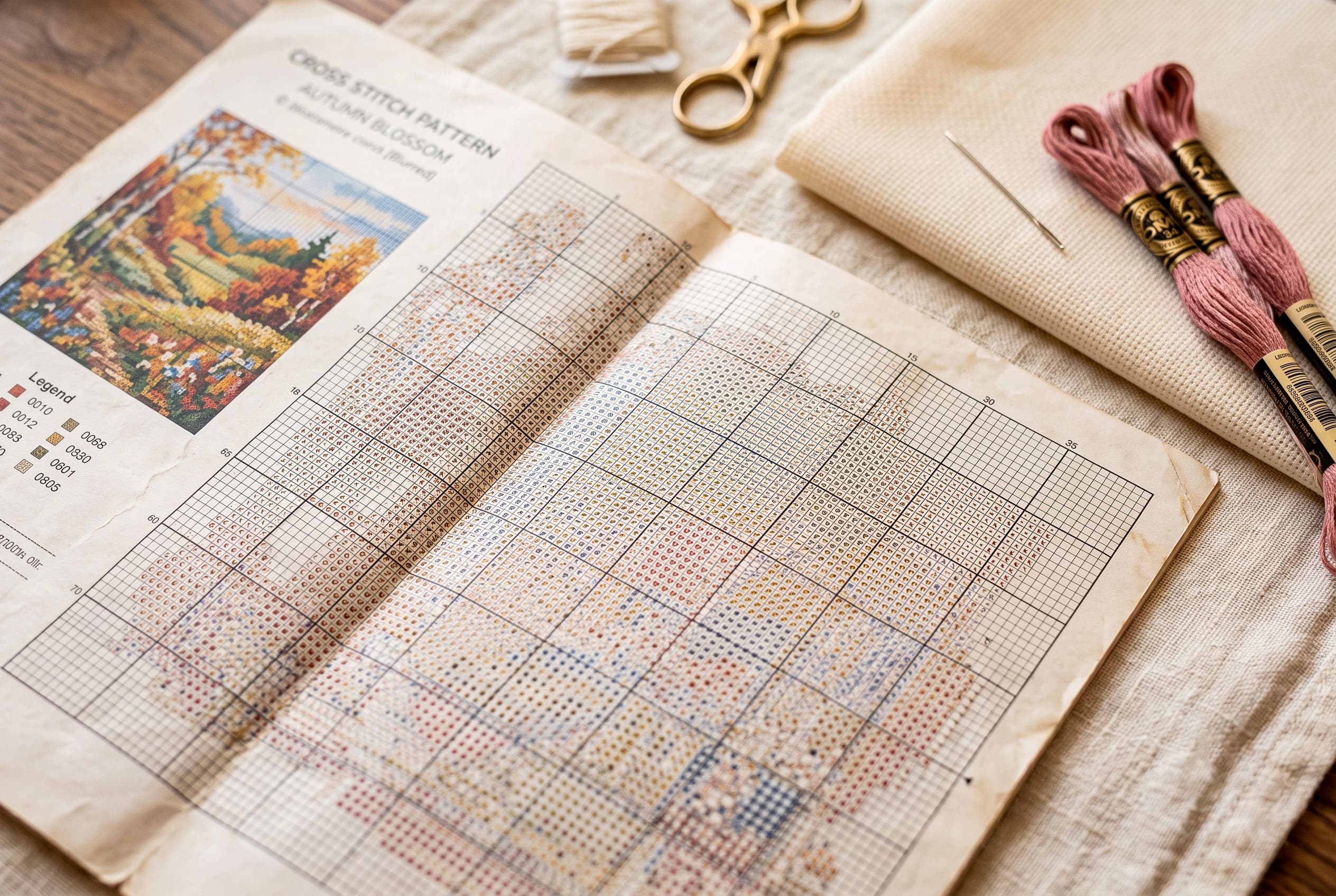 Beginner Guides
How to read a cross stitch pattern (a beginner's guide)
Symbols, grids, colour keys and arrows can look intimidating at first. Here's how to read any cross stitch pattern with confidence, one square at a time.
Read more →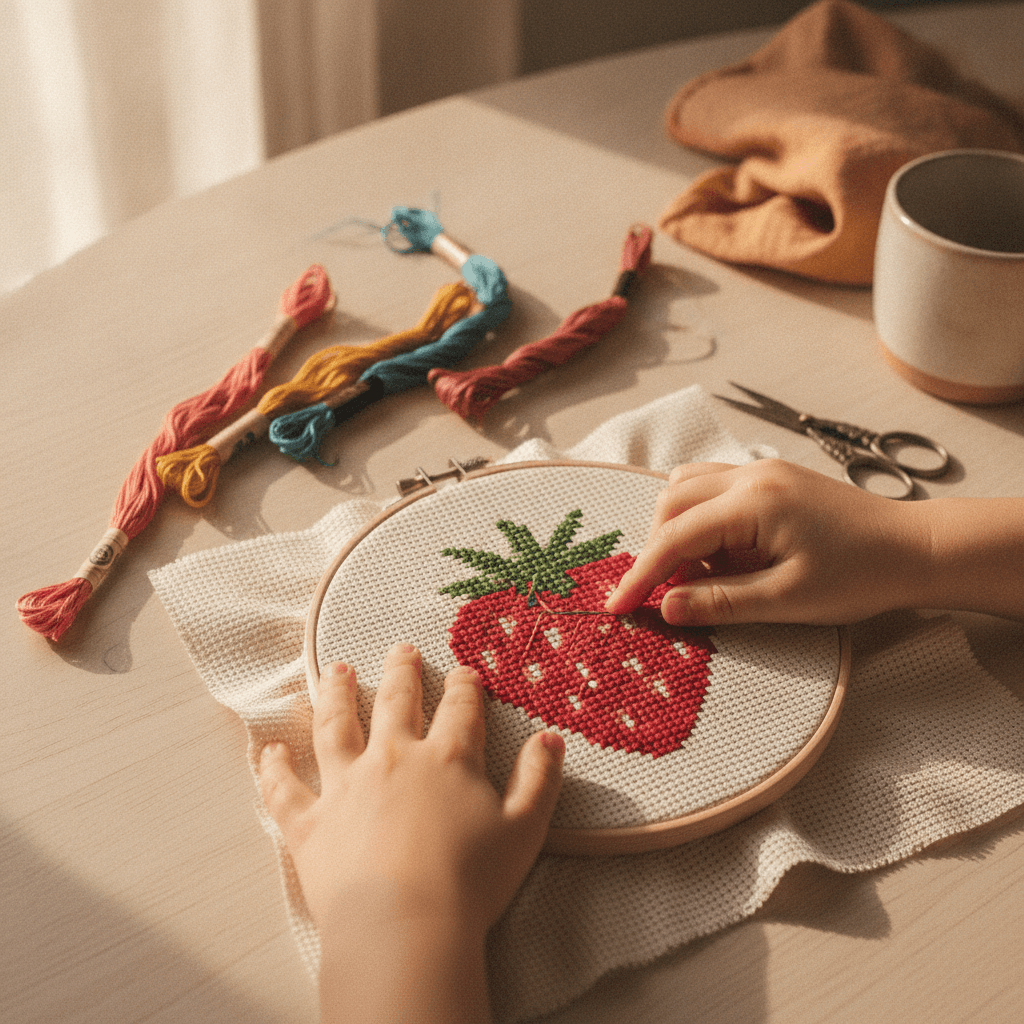 Beginner Guides
Cross Stitch for Kids: A Beginner's Guide That Works
Cross stitch for kids works beautifully once you set the project up right. Here is the fabric, thread and first design I reach for with little hands.
Read more → Beginner Guides
Cross stitch for beginners: everything you need to start
A friendly, no-jargon starter guide covering the handful of supplies you actually need, how to make your first stitch, and the tips that save beginners the most frustration.
Read more →