How to read a cross stitch pattern (a beginner's guide)
Symbols, grids, colour keys and arrows can look intimidating at first. Here's how to read any cross stitch pattern with confidence, one square at a time.
The first time you open a cross stitch pattern, all those little symbols on a grid can feel like a secret code. Good news: it's a code that takes about five minutes to crack. Once you understand the few pieces every pattern shares, you can pick up almost any chart and know exactly what to do.
The grid is your fabric
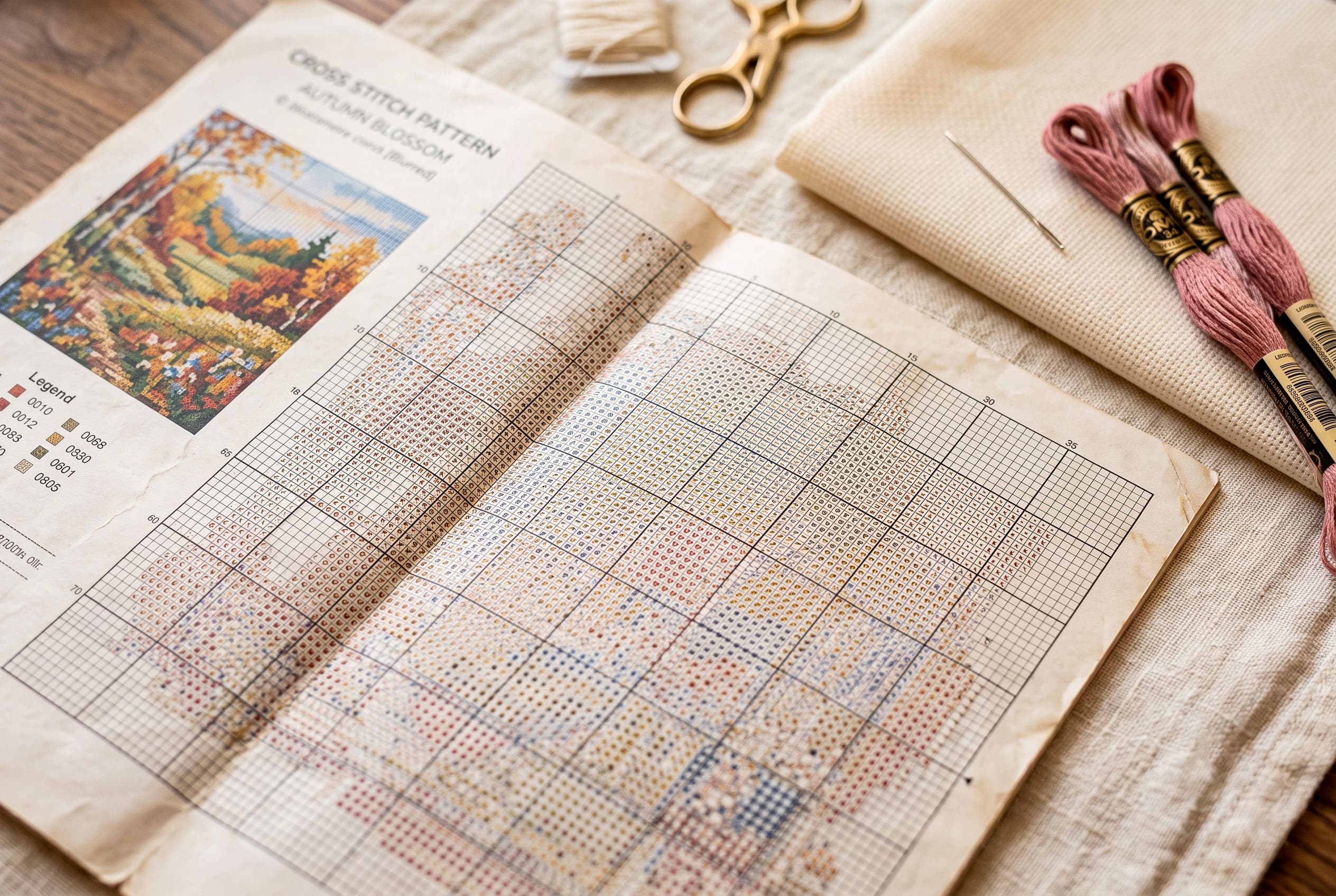
A cross stitch pattern is a grid, and each square on the grid equals one stitch on your fabric. Every square that has a symbol in it gets a stitch in that colour; blank squares stay empty (that's your background fabric showing through). The bold lines usually divide the grid into blocks of ten squares to help you count, nothing more.
Symbols and the colour key
Each symbol (a heart, a dot, a triangle, a letter) stands for one thread colour. Next to or below the chart you'll find the colour key, a little table matching every symbol to a specific floss number, usually DMC or Anchor. Before you start, it's worth gathering the threads listed in the key and keeping them in order. When a square shows a heart, you stitch it in whatever colour the key assigns to the heart. That's the whole system.
Finding the centre
Most patterns mark the centre of the design with two arrows, one on the top edge and one on the side. Where those arrows meet is the middle of your chart. Beginners are almost always told to start from the centre, and for good reason: it guarantees your design ends up centred on the fabric with even margins all around. To find the centre of your fabric, fold it in half one way, then the other; the crease point is your starting stitch.
Full stitches, and the occasional fraction
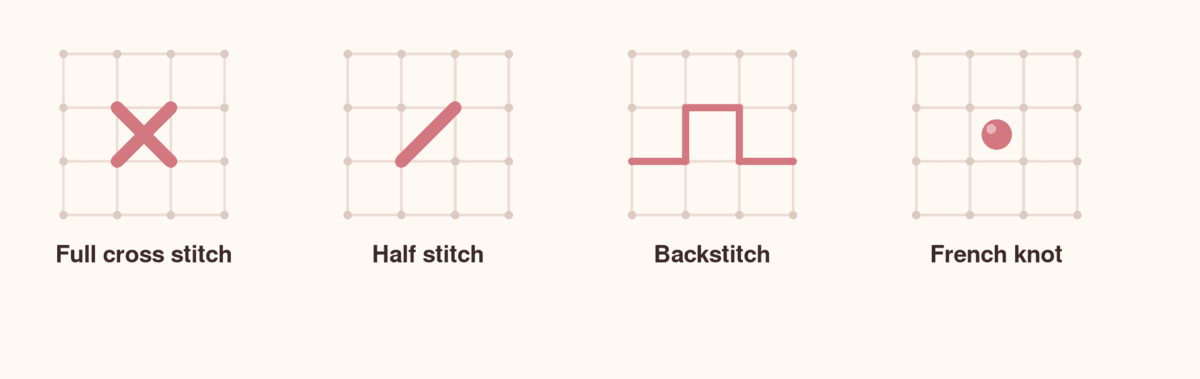
Most of what you'll stitch are full cross stitches (a complete X in one square). Some patterns add a few extras for detail:
• Half stitches: a single diagonal instead of a full X, for soft or shaded areas.
• Backstitch: thin outlines, usually shown as solid lines *on* the grid lines rather than inside a square. It's added last, once the cross stitches are done.
• French knots: little dots for eyes, berries or texture.
If you're just starting out, pick a pattern that's mostly full stitches. You can add the fancier techniques to your toolkit later.
A simple order to work in
“Count twice, stitch once. It saves a lot of unpicking.”
A reliable rhythm for any chart:
1. Find the centre of the chart and the fabric, and start there.
2. Work one colour or one small area at a time, counting squares as you go.
3. Keep your top stitches all facing the same direction, which makes the finished piece look neat and even.
4. Save backstitch and knots for the very end.
Before your first stitch
Two quick checks make everything smoother. First, make sure you're using the right number of threads (see how many strands of floss to use). Second, check your fabric is big enough by running the numbers through our fabric size calculator so you're not left with cramped margins.
That's genuinely all there is to it. A pattern is just a map: the grid is your fabric, the symbols are your colours, and the arrows show you where to begin. Start in the middle, take it one square at a time, and the picture appears on its own. Happy stitching.