14 Count vs 18 Count Aida: Which Should You Stitch On?
The same chart, two very different evenings. Here is how 14-count and 18-count aida compare on finished size, strands, needles and eyestrain, and which one I would pick for most projects.
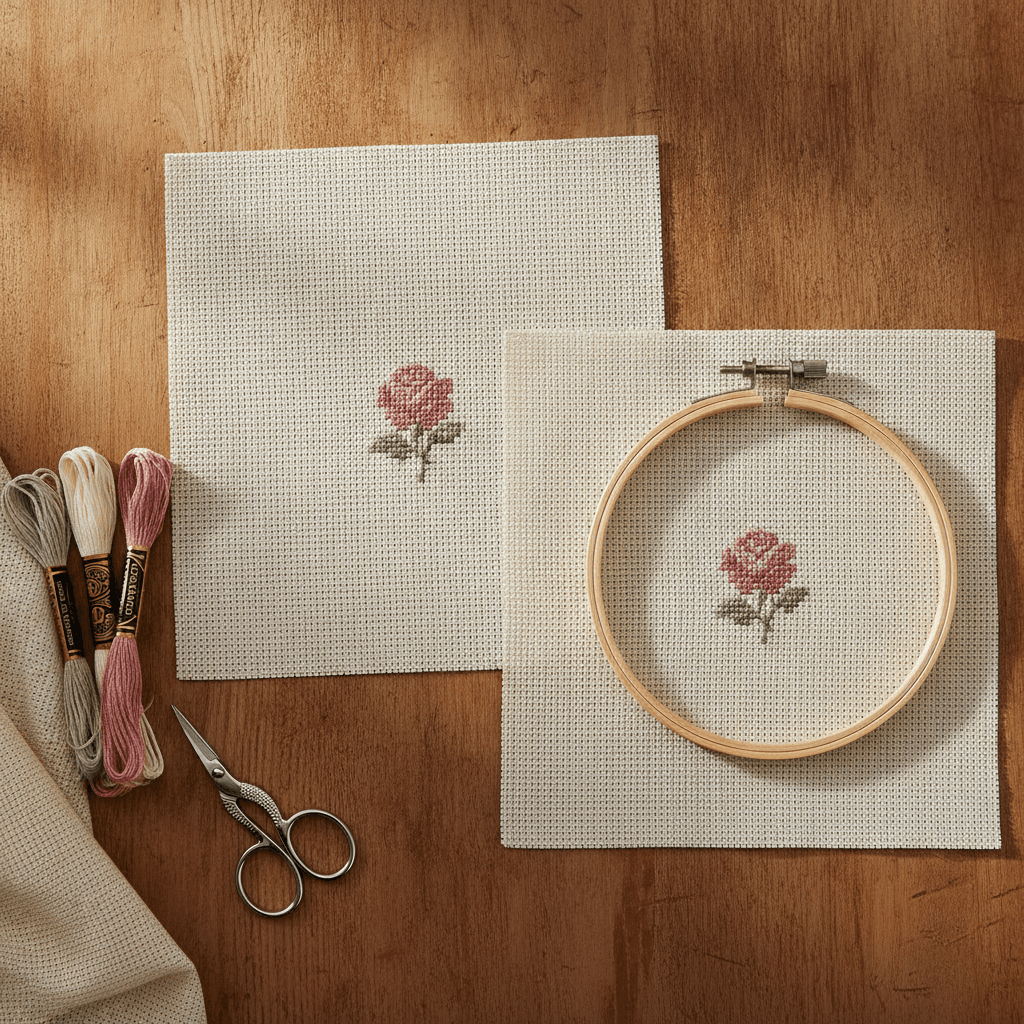
Hold a square of 14-count aida next to a square of 18-count and they look almost the same from across the room. Up close they are two different evenings. One lets you find the next hole without thinking. The other asks you to lean in.
If you are stuck on 14 count vs 18 count aida for your next project, the choice comes down to four things: how big the finished piece will be, how many strands you use, how your eyes feel after an hour, and how much detail the design carries. Here is how each one plays out, and which I would pick in your place.
What the count actually means
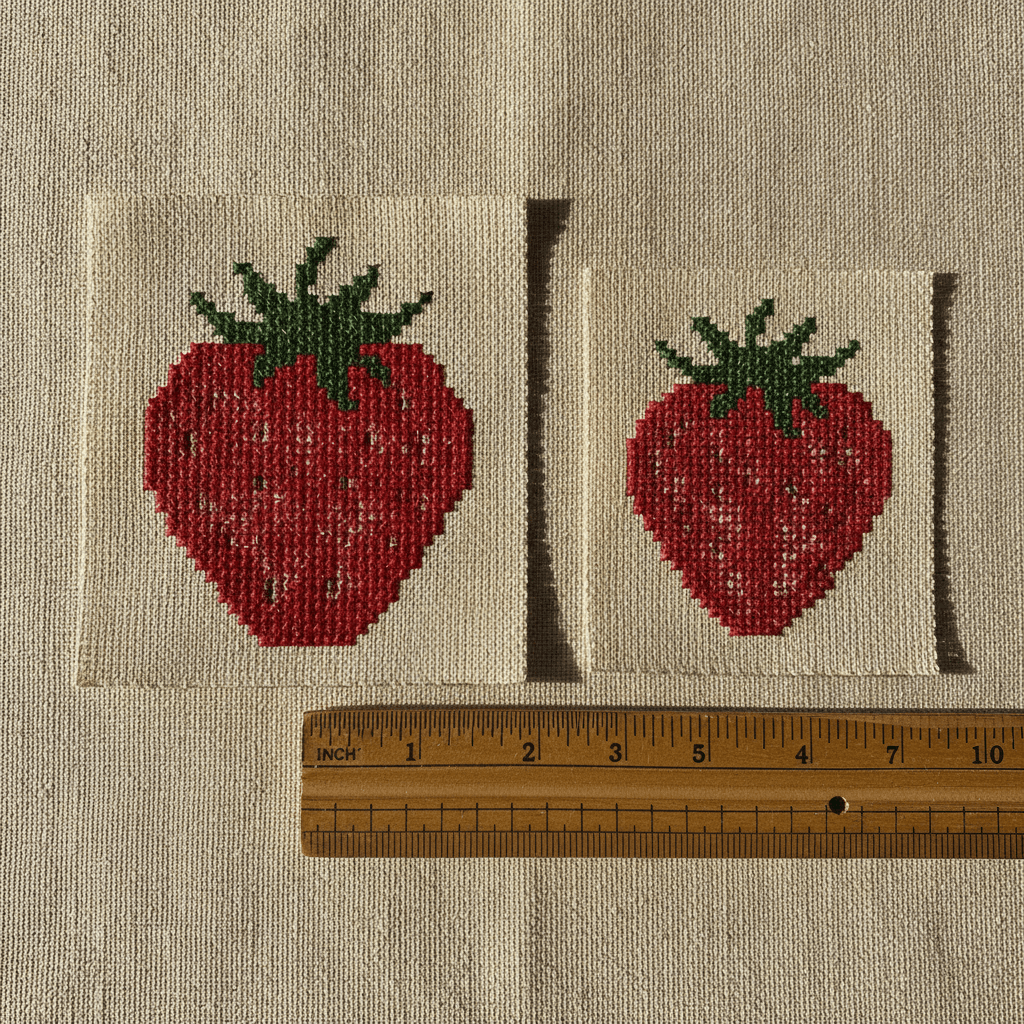
The count is the number of squares, and so the number of stitches, in one inch of fabric. 14-count aida gives you 14 stitches per inch and 18-count gives you 18, so the squares on 18-count are smaller, the holes sit closer together and the same chart comes out smaller.
That is the whole difference. Same weave, same cotton, same way of stitching. Zweigart and DMC both sell both counts, usually in the same colors, so you are rarely forced into one by what the shop has on the shelf.
Finished size: the gap is bigger than it sounds
Four stitches per inch does not sound like much. Run it across a whole design and it adds up fast. A chart that is 140 stitches wide and 100 tall finishes at 10 by about 7 1/8 inches on 14-count, while on 18-count the same chart comes out at roughly 7 3/4 by 5 1/2 inches, which is about 40 percent less area on the wall.
The rule is simple: take the stitch count, divide by the fabric count, and you have inches.
That matters most when you already have a frame in mind. A design that overflows an 8 by 10 frame on 14-count may sit comfortably inside it on 18-count, with room left for a mat. The fabric calculator does this math for both counts and adds the margin you need to cut, so you can compare the two before buying anything.
Strands and needles for each count
On 14-count the usual choice is two strands of floss for full crosses and one for backstitch, and most charts written for 14-count assume exactly that.
18-count is where stitchers disagree. One strand gives a light, slightly airy look where a little fabric shows between the stitches. Two strands fill each square almost completely and give that dense, printed look, but the holes are small and the floss can feel crowded on its way through. I use two strands for anything with big blocks of color and one when a design is mostly fine detail or I want a softer, vintage feel. Stitch a 10 by 10 test square of each before you commit on a big piece. It takes twenty minutes and settles the question for good.
Needles change too. A size 24 tapestry needle suits 14-count. On 18-count drop to a size 26, which is slimmer and slides through the smaller holes without pushing the weave open. If you want more on strand counts and coverage, the techniques and tips section goes deeper.
Which one is easier on your eyes?
14-count, and it is not close.
The holes on 18-count sit about 1.4 mm apart instead of 1.8 mm, and under a warm lamp late in the evening they start to blur into each other. If you already reach for reading glasses, you will notice within the first row. A daylight lamp helps a lot and a magnifier on a stand helps even more, but that is extra gear and extra table space you simply never needed on 14-count.
My first 18-count project was a small blue and white bird ornament, barely 50 stitches across. I miscounted by one hole three separate times that first evening, every time on DMC 3753, a pale blue that almost disappeared into the fabric. I finished it with a clip-on lamp a few inches from the hoop.
Mistakes also cost more on the finer fabric. 18-count frays sooner when you unpick, and the small holes stretch more visibly, so every miscount leaves a little more of a trace.
Floss and cost
Smaller stitches use less thread each, so a chart stitched on 18-count uses somewhat less floss than the same chart on 14-count. The saving is real but modest, and on a small or medium design it rarely changes how many skeins you buy. The thread calculator will estimate skeins for either count if you want an actual number.
Fabric prices sit close enough together that they should not drive the choice. You do need a smaller piece of 18-count for the same chart, which evens things out further. Let the design decide.
My pick for most projects
Start on 14-count. For a first project, for anything you stitch after a long day, and for most designs built from bold shapes, it is the easier fabric, and the finished piece looks just as good.
Move to 18-count when a design has fine detail you want to keep small: ornaments, bookmarks, lettering, or portraits with lots of color changes. It is also the right call when a big chart would otherwise end up too large for the wall you have in mind. You will hear that 18-count is for experts only. I do not buy that. It is for stitchers with good light and a design that needs it.
And if you like the fineness of 18-count but miss the look of linen, 36-count evenweave over two threads gives you the same 18 stitches per inch on a softer, more natural fabric.
Pull up the chart you have your eye on, divide its width by 14 and then by 18, and hold a ruler up against the wall where it will hang. The right count is usually obvious by the time you put the ruler down.